List of Depeche Mode sample sources by album
- This article is about the various sample sources used on Depeche Mode album tracks and official remixes. For sample sources used on Recoil works, see Recoil sample sources. For sample sources used on Martin Gore works, see List of Martin Gore sample sources by album. For sample sources in the live arrangements of Depeche Mode songs as they were performed on the various concert tours undertaken by the group, see List of Depeche Mode live sample sources by tour.
| Glossary Terms used in this article |
In audio production, sampling refers to the use of a portion (or sample) from a sound within another recording. As pioneers of the electronic music genre, Depeche Mode are among the most prolific acts to utilise sampling technology within a traditional pop music format. Among the many original samples recorded and utilized by Depeche Mode to enhance the atmosphere of their musical output are many that originated elsewhere, including brief passages of musical recordings by other artists, snippets of audio from television shows, radio broadcasts, films, environmental sounds, and more. Analysis of these sample sources and how they are manipulated is a popular topic of discussion amongst fans of the group.
| Key | ||||
|---|---|---|---|---|
|
|
The sample is confirmed to have been used in the specified song by a past/present member of Depeche Mode, an individual involved in its production, or band archivist Daniel "BRAT" Barassi. | |||
|
|
The sample is independently confirmed to have been used in the specified song. | |||
|
|
The sample is likely to have been used in the specified song but has not yet been confirmed. | |||
|
|
The sample is not yet confirmed to have been used in the specified song. | |||
|
|
The sample is confirmed to not have been used in the specified song. | |||
|
|
It is unclear if the sample was used in the specified song. | |||
Information
This page documents all verifiable sound sources for many of the musical parts used by Depeche Mode in the production of their studio albums recorded between 1981 and 2023.
Due to the manipulated nature of the samples described in this article, there is unavoidable potential for error or sample misattribution. To ensure accuracy, this article strives to use verified quotes from band members and recording personnel with citations wherever possible, audio examples, and independent research voluntarily contributed by Depeche Mode and Recoil fans worldwide. This article provides an interesting document on this topic in a tabular format that is organized, well-researched, and reasonably accurate. Please bear in mind that due to the limited number of relevant quotes for each sample from band members or associates involved in producing the music described on this page, audio samples that lack official confirmation are not guaranteed to be accurate.
This article differentiates samples by origin: Self-made samples, which describe any material initially recorded by Depeche Mode, and Sourced samples, which describe samples not initially recorded by either group. In addition to confirmed samples, this article also covers samples commonly misreported as having been used but directly refuted by a member or associate of Depeche Mode.
If you notice an error or wish to contribute or request the removal of information contained within this article, please feel free to contact us.
Studio albums
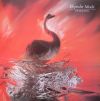
Speak & Spell (1981)
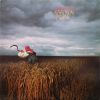
A Broken Frame (1982)

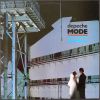
Some Great Reward (1984)
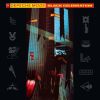
Black Celebration (1986)
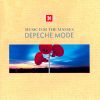
Music For The Masses (1987)
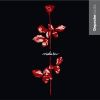
Violator (1990)
- Main article: List of Depeche Mode sample sources by album/Violator
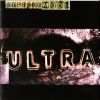
Ultra (1997)
- Main article: List of Depeche Mode sample sources by album/Ultra
Exciter (2001)
- Main article: List of Depeche Mode sample sources by album/Exciter
Playing The Angel (2005)
Delta Machine (2013)
Delta Machine is not known to contain samples from any identifiable sources.
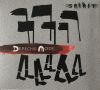
Spirit (2017)
Spirit is not known to contain samples from any identifiable sources.
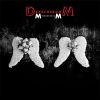
Memento Mori (2023)
Memento Mori is not yet known to contain samples from any identifiable sources.
Compilation albums

The Singles 81→85 (1985)

The Singles 86>98 (1998)

Remixes 81–04 (2004)
Other works
Enjoy The Silence····04 (2004)
"Mercy In You (The BRAT Mix)"
| "Mercy In You (The BRAT Mix)" Depeche Mode 2004
| |||||
|---|---|---|---|---|---|
| Sample sources | |||||
| Sample | Source | Status | Notes | Audio | |
| Choral elements | Ennio Morricone - Moses the Lawgiver (Original Soundtrack) - "Moses Theme (Main Titles)" - 1974 |
|
A series of manipulated sections of audio derived from the title theme of Italian/British television miniseries Moses the Lawgiver as composed by Ennio Morricone are combined in a new sequence from how they were originally recorded to form the choir textures audible during the intro and chorus sections of "Mercy In You (The BRAT Mix)". | ||
| Guitar elements | Chemistry Set, Various - Sub Pop 200 - "Underground" - July 1989 |
|
A manipulated section of audio derived from "Underground" by Chemistry Set as featured on the 1988 compilation CD Sub Pop 200 is audible sporadically throughout "Mercy In You (The BRAT Mix)". | ||
| Orchestral elements | Akai - S3000 MIDI Stereo Digital Sampler - SL3103 "Tremolo Strings Mix" - "TREMO STR-G3", "TREMO STR-C4", "TREMO STR-G4", "TREMO STR-C5" |
|
A series of orchestral samples derived from Akai S3000 diskette SL3103 "Tremolo Strings Mix" are utilised throughout the third verse section of "Mercy In You (The BRAT Mix)". |
| |
"Route 66 (Nile Rodgers Mix)"
| "Route 66 (Nile Rodgers Mix)" Depeche Mode 1989 |
Self-made samples | ||||
|---|---|---|---|---|---|
| Sample | Notes | Audio | |||
| Bass elements | The bassline of "Behind The Wheel" (and "Route 66" by extension) is comprised of a series of sampled and synthesised parts which combine to form the driving bass rhythm audible throughout the song. These sounds include a sample of a hand striking the end of a hoover tube, a pitched-down sample of a guitar pluck, and a Minimoog bass for additional low end presence.[1] The sampled elements are utilised throughout the song, whereas the Minimoog section begins at the end of the second verse. Notably, the hoover tube sample is re-used as a bass layer in the Recoil instrumental "The Sermon". | ||||
| Melodic elements | In May 2020, fan "DMK" kindly provided DM Live Wiki with documentation for a series of Emulator II floppy disks that accompanied a collection of restored studio equipment used by Music For The Masses co-producer Dave Bascombe during the production of music albums for artists other than Depeche Mode in the mid to late eighties. One disk, labeled "Wineglass (106)", features an untitled preset ("NULL PRESET"), which contains a bell-like sample, presumably the sound of a wine glass being tapped. This sample is used to produce the arpeggio that occurs throughout "Behind The Wheel" (and "Route 66" by extension). Notably, this sound is also used in "Never Let Me Down Again", "Strangelove", "Route 66", and the Recoil instrumental "Grain". |
| |||
| Sample sources | |||||
| Sample | Source | Status | Notes | Audio | |
| Drum elements, snare, tambourine | Talk Talk - The Colour of Spring - "I Don't Believe In You" - 1986 |
|
A snare and tambourine hit derived from Talk Talk's "I Don't Believe In You" is used throughout "Route 66 (Nile Rodgers Mix)". | ||
| Synthesizer elements | Synclavier II Timbre Directory Diskette #1 - 2148 ELEC.DULCIMER 2 |
|
The sitar-like melody audible sporadically throughout "Route 66" consists of an edit of "2148 - ELEC.DULCIMER 2", a dulcimer-like timbre featured on Synclavier II timbre directory diskette #1. Similarly, "ELEC.DULCIMER 2" was previously used to melodic effect during the verse sections of "The Landscape Is Changing". |
| |
| "Death's Door" Depeche Mode 1991
| |||||
|---|---|---|---|---|---|
| Sample sources | |||||
| Sample | Source | Status | Notes | Audio | |
| Drum elements | Angelo Badalamenti - Music From Twin Peaks - "Freshly Squeezed" - 11 September 1990 |
|
A manipulated section of audio derived from Angelo Badalamenti's instrumental "Freshly Squeezed" as featured on the 1990 Twin Peaks television series soundtrack is utilised throughout all versions of "Death's Door". In a September 2025 interview, Alan Wilder recalled the use of audio derived from the Twin Peaks soundtrack within "Death's Door":
|
||
| Ambient elements | Andrew Poppy - The Beating Of Wings - "Listening In" - 1985 |
|
A processed, looping section of audio derived from the opening moments of "Listening In" by Andrew Poppy is utilised throughout the intro section of all versions of "Death's Door". | Click to display/hide audio example | |
| Drum elements | Robert Wyatt - Nothing Can Stop Us - "Shipbuilding" - March 1982 |
|
A manipulated section of audio derived from "Shipbuilding" by Robert Wyatt is utilised throughout all versions of "Death's Door". Notably, "Shipbuilding" was written by Clive Langer and Elvis Costello during the 1982 Falkands War. | ||
| Drum elements, ride cymbal | Optical Media International (OMI) - Emulator III Universe of Sounds Master Studio Collection Volume 1 - Machine Set - "MPC Ride Cym 1" |
|
A ride cymbal derived from "MPC Ride Cym 1", a sample featured on the "Machine Set" voice of Universe of Sounds Master Studio Collection Volume 1 by Optical Media International is utilised throughout all versions of "Death's Door". | ||
| Drum elements, ride cymbal | Akai - Akai MPC60 - STUDIO SET - BELRIDE1 - 8 December 1988 |
|
A manipulated, truncated ride cymbal sound derived from Akai MPC60 factory diskette "Studio Set" is utilised throughout all versions of ""Death's Door". |
| |
The Sims 2: Open for Business (2006) (video game)
"Suffer Well" (Simlish version)
| "Suffer Well" (Simlish version) Depeche Mode 2006
| |||||
|---|---|---|---|---|---|
| Sample sources | |||||
| Sample | Source | Status | Notes | Audio | |
| Synthesizer elements | Native Instruments Reaktor > Kaleidon > "Lagerhallenromanti" - 2003 (?) |
|
A sweep synthesizer pad derived from "Lagerhallenromanti", a preset featured in the Native Instruments Reaktor ensemble Kaleidon, is utilised throughout the "Simlish" version of "Suffer Well".[footnotes 1] |
| |
(Ăhk-to͝ong Ba͞y-bi) Covered (2011)
"So Cruel"
"So Cruel" is not known to contain samples from any identifiable sources.
STUMM433 (2019)
"4’33”" is not known to contain samples from any identifiable sources.
Unofficial or unreleased

References
- ↑ Source: Shunt Q&A: ARCHIVES : DEPECHE MODE : MUSIC FOR THE MASSES
- ↑ "Alan Wilder Interview - The Devout talk to one of electronic music’s favourite producers". depechemodetribute.co.uk, September 2025. https://depechemodetribute.co.uk/alan-wilder-interview/
Notes
- ↑ The Sims 2: Open for Business is a computer game only; the "Simlish" version of "Suffer Well" was not released in any audio-only format.